
In the classroom
Play the recording. Open the conversation.
A recorded voice in every activity. Ask pupils to listen, invite them to reply, then bring in a question about their own lives.
The recording plays; the teacher hears the child. No speech recognition or pronunciation scoring.
 Play 0:50, with sound and captions
Read what is said
- NOTE Reviewed by hand against the recording. Speech recognition drafts
- are not published unreviewed.
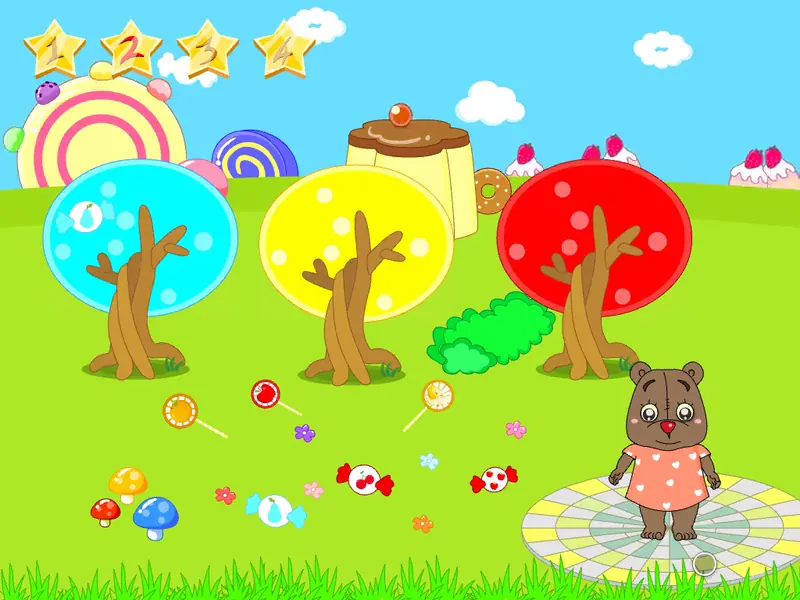
- Candy tree.
- Wow!
- Look at the candy forest!
- What color is this tree?
- Um, it's blue.
- Awesome!
- It's yellow.
- Awesome!
- It's red.
- Please send the candies back to the tree.
Take the class shopping.
What would you buy? Use these prompts to turn a shopping request into a classroom conversation.
 Play 1:07, with sound and captions
Read what is said
- NOTE Reviewed by hand against the recording. Speech recognition drafts
- are not published unreviewed.
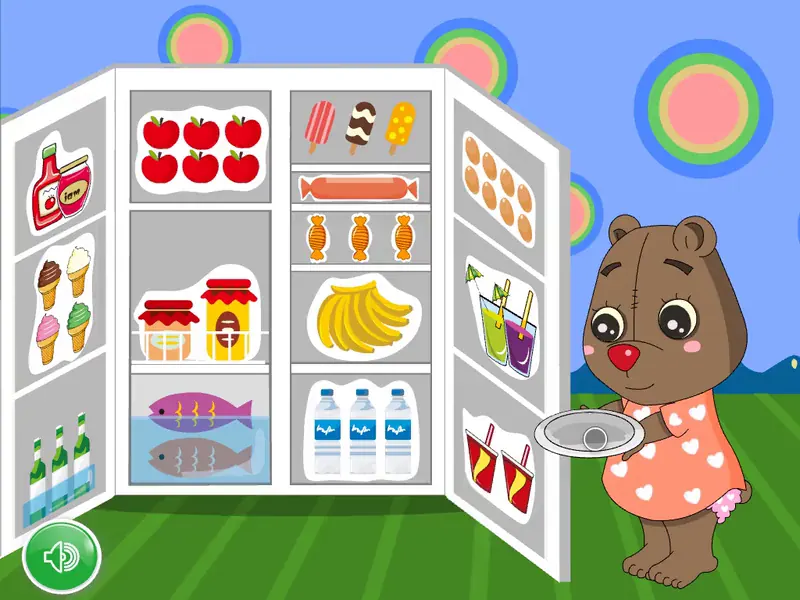
- The Shopping List
- Give me some pears.
- The fridge.
- Can you find some pears?
- Give me some cakes.
- Give me some bananas.
- Hear the order. In The Shopping List, the bear asks for foods, and the class decides whether each one is in the fridge or goes on the shopping list.
- Check the fridge together. Invite a pupil to decide — in the fridge, or on the list? — then ask the class to say the request together.
- Your turn to order. Ask pupils what they would buy and invite them to tell a partner.
A real run of the activity, answered correctly.
Plan the moments when your pupils join in.
Try this sequence, adjusting the pace and questions for the class you teach.
Choose what to practise
Look for the language you want to practise. The activity menu groups the material by unit and lesson. Choose an activity to open it.
Listen together
Play the recording and give the class something to listen for: a word, a name or a request.
Give a pupil a turn
Invite a reply, a point or a choice. Ask the rest of the class whether they would choose the same.
Hear it again or move on
Choose something to revisit together, or return to the menu for the next activity.
Shall we sing it?
The song recordings include Old MacDonald, Twinkle Twinkle Little Star, B-I-N-G-O and Head Shoulders Knees and Toes.
Lessons return to the story’s language. Try a song alongside the story. Invite pupils to listen, then join in when they are ready.
Before the tap, ask the question.
Games in the library include Hide and Seek, I Spy, Memory Game, Peek-a-boo, Dot to Dot and Go Shopping.
Ask pupils what they would choose before giving someone a turn. Afterwards, ask why they chose it.
685 of the 821 activities accept learner input: tapping, dragging, matching and choosing. 136 activities play straight through.
Questions about classroom use
Does it listen to pupils or score their speaking?
The activities play recorded audio. They do not listen to pupils: there is no speech recognition or pronunciation scoring. Invite children to repeat the English; their teacher hears the response.
Does it track progress or offer a pupil app for home?
A course library, not a platform. There is no pronunciation scoring, no adaptive path, no AI tutor, no pupil app for home and no progress dashboard.
What about keyboard-only or screen-reader access?
The activities are visual and audio-led and were built for a pointer or a finger. They have not been assessed against an accessibility standard. If you have learners who need keyboard-only or screen-reader access, raise it on the first call.
Check the sound from the back of the room.
Installation is arranged with your IT team. Include the screen, speakers and delivery option in your setup discussion.
Which activity shall we look at together?
Tell us what you want pupils to practise and the activity you would like to see. Bring the questions you would ask in class.