
Rainbow & Speak English for schools
Give your English team a story to teach.
Rainbow & Speak English is a library of story-based English activities for young learners, with a recorded voice in every activity.
The recording plays; the teacher hears the child. No speech recognition or pronunciation scoring.
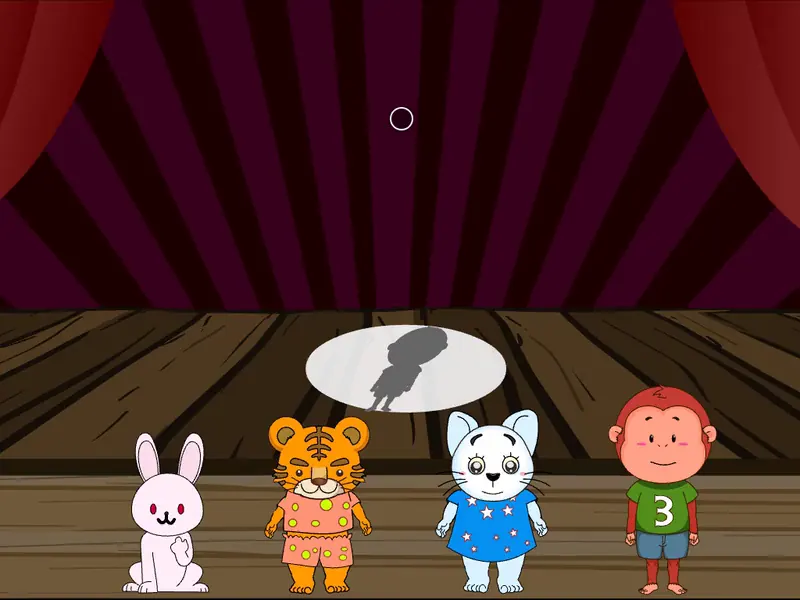 Play 0:45, with sound and captions
Read what is said
- NOTE Reviewed by hand against the recording. Speech recognition drafts
- are not published unreviewed.
- What do the animals like?
- What do the animals like?
- Monkey.
- I am hungry.
- Feed me.
- Banana.
- Yummy, yummy.
Start with what you want to hear in class.
A request? A description? An answer about home? Take the English in your scheme of work and look for an activity to teach from.
Try a question with your class
Breakfast in the bathroom?
In Leo's House, the recording names the living room, bathroom, kitchen, dining room and bedroom. Ask pupils where they would eat breakfast. Suggest the bathroom, then invite them to put you right.
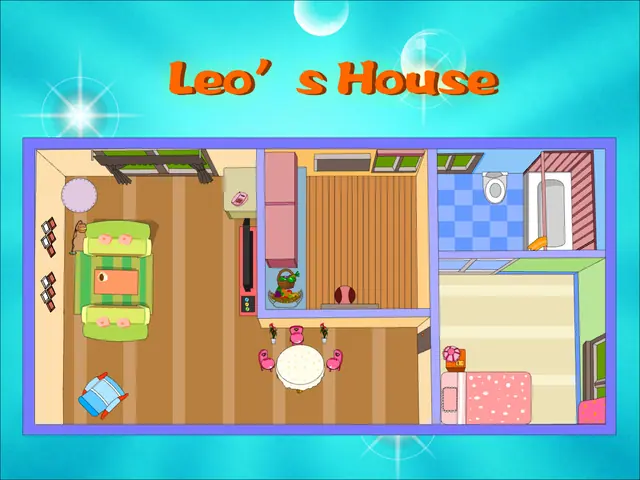
Opening frames from the activities.
Build the lesson around your pupils.
Give them a choice
Ask a pupil what they would choose. Before they tap or point, invite the rest of the class to answer too.
Games in the library include Hide and Seek, I Spy, Memory Game, Peek-a-boo, Dot to Dot and Go Shopping. Browse the activities.
Pick up the story again
Ask what pupils remember. Choose what to revisit and where to add a question about their own lives.
Lessons return to the story’s language.
Plan for the room you teach in
Bring your IT colleague into the conversation about the classroom computer, screen and speakers.
Desktop playback works offline after online activation. Check the setup.
Letters and sounds
Which picture starts with /kw/?
A quick phonics round your class can shout the answer to.
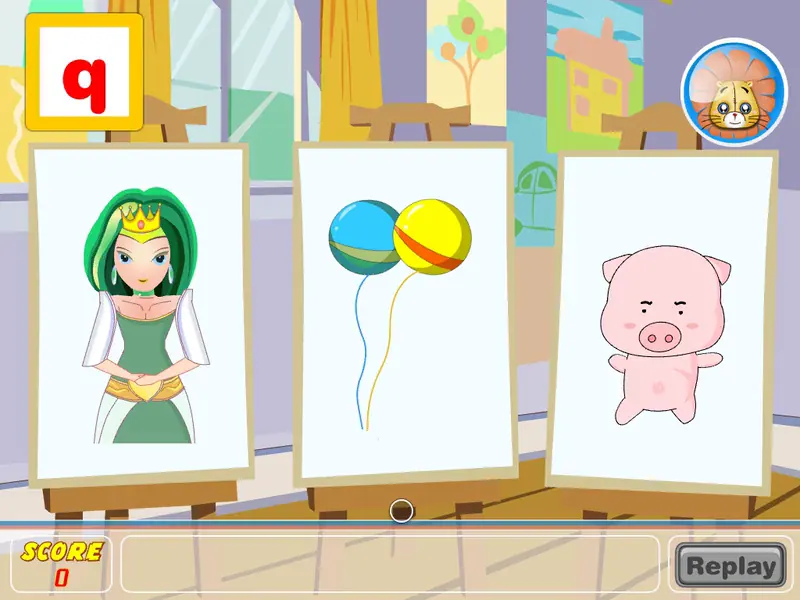 Play 0:56, with sound and captions
Read what is said
- NOTE Reviewed by hand against the recording. Speech recognition drafts
- are not published unreviewed.
- The Painting Game
- Click on the picture that begins with /kw/.
- Queen, queen. That's great!
- Click on the picture that begins with /kw/.
- Quilt, quilt. That's great!
- Click on the picture that begins with /k/.
- Kite, kite.
- That's great!
- Click on the picture that begins with /r/.
- Rabbit, rabbit, that's great!
- Click on the picture that begins with /r/.
- Rose, rose, that's great!
- Hear the sound. In The Painting Game, the recording says a letter sound, and the child picks the picture that begins with it.
- Let the room answer first. Invite pupils to say the word aloud before anyone points.
- Carry it on. Ask for another word that starts with the same sound.
A real run of the activity, answered correctly.
Give the planning meeting something to look at.
The activities are already made and recorded.
Open a unit together. Ask each teacher which activity they would teach and what they would ask. Compare ideas for the classes you have.
Before you choose for a year group
Which year groups is it for?
The material is written for young learners. No single age band fits every school, so which of your year groups it suits is a judgement for your academic team, looking at the real activities.
How should we compare it with our curriculum?
We do not publish a curriculum alignment map — an honest one needs a reviewer working to your syllabus.
Bring your scheme of work to the review. Mark the activities you would use, the language you would introduce and anything you would need to add.
What about pupils who need accessible activities?
The activities are visual and audio-led, built for a pointer or finger. They have not been assessed against an accessibility standard.
Would your teachers use it again?
We propose a paid classroom pilot with named teachers, an agreed scope and a decision date set before it starts.
Make that a question for a classroom pilot. Identify the teachers who would try the material and ask what they need to find out.
Bring us the lesson you have in mind.
Tell us about your classes, the activity you would like to explore and the questions that came up in your team meeting.
We quote after discussing your campuses, learners and rollout requirements.